




-

"Very nice Posters. The quality is amazing and we received it very quickly !"
-

"A shop to visit absolutely. Huge selection of posters. We spent more than an hour there !"
-

"Perfect to find gift. Price are very good. An they can frame and pack it on site"


About the Artist
Julius Klinger brings the discipline of commercial design to this theater poster. Born in Vienna, he became known for translating elegant figures into direct advertising images. Klinger understood that a brief visual message could carry sophistication without becoming obscure. That principle gives this Julius Klinger work a strong place in the history of modern graphic design. The artist name connects a vintage poster to Viennese advertising culture and to an art print intended for display. Its subject keeps Klinger rooted in public entertainment rather than detached from everyday life. For contemporary home decor, his approach remains a useful link between publicity and fine art print culture.
The Artwork
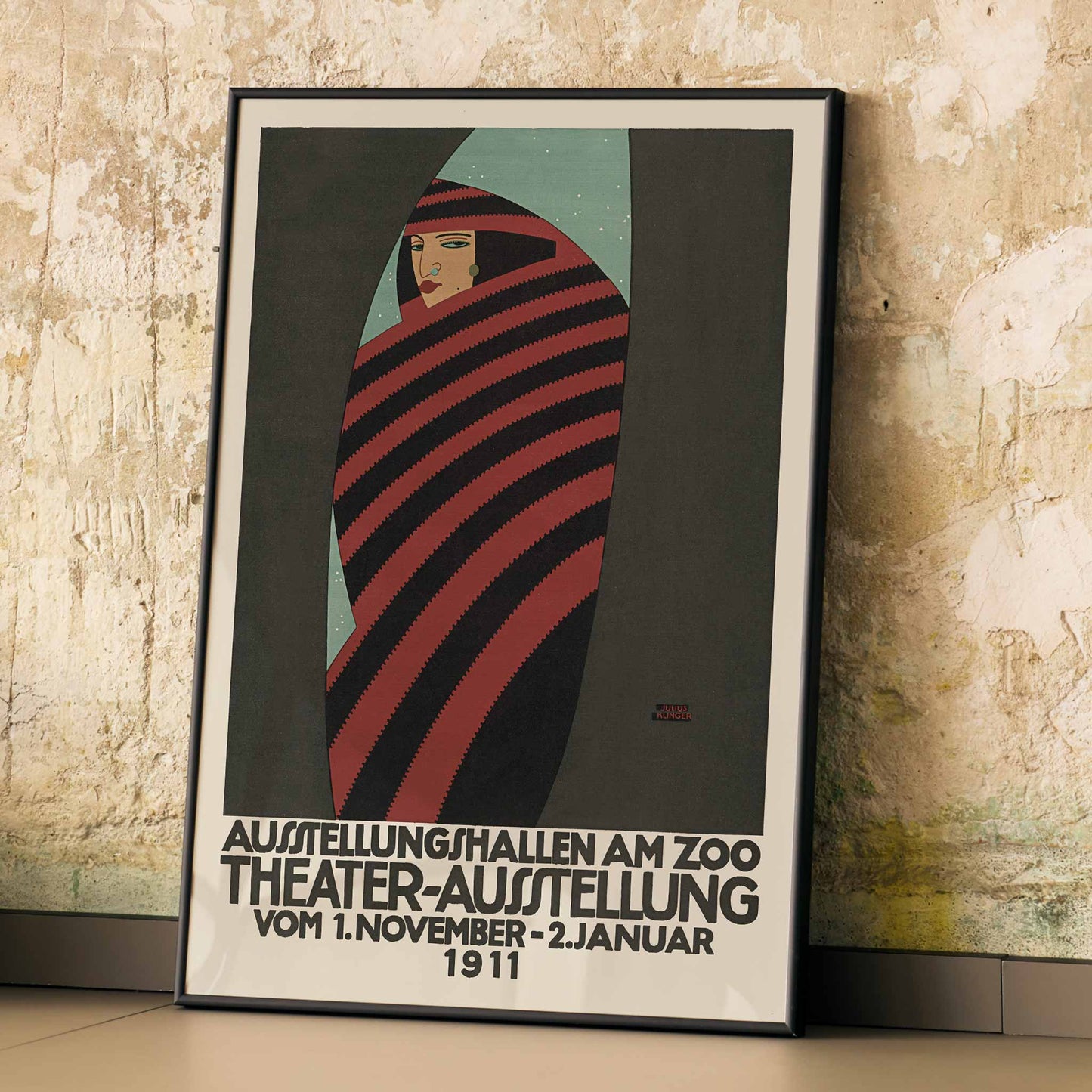
The title identifies a Theater Exhibition held at the exhibition halls at the zoo in 1911. German lettering on the poster records the event as Ausstellungshallen am Zoo Theater-Ausstellung, with dates from 1 November to 2 January and the year 1911 clearly stated. The notice served a practical purpose: directing visitors toward a public program devoted to theater. At the same time, it gave the exhibition a distinctive identity that could travel beyond the venue. As a vintage print, the piece preserves a small piece of cultural history, showing how an entertainment event used graphic publicity to announce its place in city life. The subject makes this wall art relevant to anyone interested in the history of theater advertising.
Style & Characteristics
A tall, dark figure occupies the center, wrapped in broad red-and-black stripes that curve from the head toward the lower edge. The face appears in profile beneath a narrow red band, while muted teal opens behind the upper body and along one side. Tiny pale marks interrupt that teal field, creating a restrained suggestion of atmosphere. A cream border separates the image from the heavy German typography below. The lettering forms a solid visual base, with the date set beneath it. This vertical poster relies on strong contrast and repeated curves, giving the minimalist design a theatrical sense of concealment.
In Interior Design
In a softly lit reading room, this vertical poster can hang above a low walnut cabinet in a slim black frame. The dark ground gives the wall art visual weight, while the red stripes introduce a measured pulse against a quiet green wall. Cream typography near the bottom keeps the large image connected to the furniture below. A linen-shaded lamp would reveal the fine details in the face and lettering after dusk without competing with the central figure. Used as home decor, the print brings early twentieth-century advertising into the room through a focused theatrical subject. Its height also gives a narrow wall a clear point of direction.